OEM vs ODM Sportswear Manufacturing: What Is the Difference?
For a sportswear brand, OEM versus ODM decides who develops the product, who controls the technical brief, what the sample proves, and what must be approved before bulk production.
Tonton Sportswear’s 22 years of sportswear export experience shows: the strongest program is the one where development responsibility, approval authority, and reorder records are clear before a factory reserves materials or starts production.
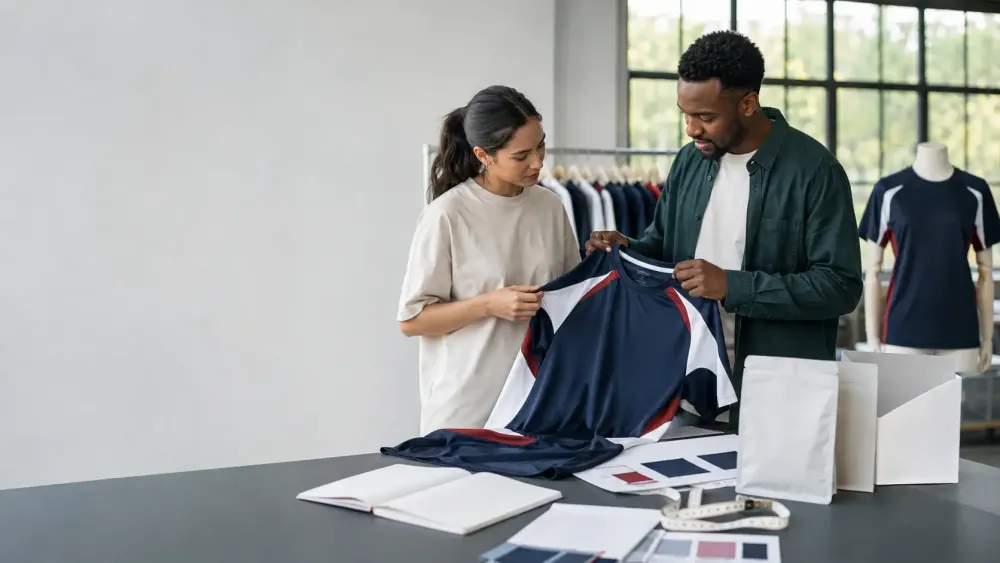 OEM and ODM differ most in who owns the product-development decisions—not in the garment label.
Start with responsibility, not the label
OEM (original equipment manufacturing) usually means the buyer brings the defined product: artwork, fit direction, measurements, fabric or performance requirements, branding, and packaging instructions. The manufacturer turns that approved brief into a production-ready garment.
ODM (original design manufacturing) usually means the manufacturer contributes more to the starting product: an existing platform, pattern direction, material options, construction suggestions, or artwork development. The buyer still makes the commercial choices and must approve the final version before bulk production.
These labels are used differently across the industry, so do not stop at the headline on a quotation. Ask a simpler question: which party is responsible for each product decision and each approval?
OEM: buyer-led specification; manufacturer-led execution.
ODM: manufacturer-supported development; buyer-led selection and release.
Both: a written approved master record is needed before bulk production.
Choose OEM when your product definition is already mature
OEM is a good fit when your brand already has a stable tech pack, graded size chart, artwork files, trim list, labeling rules, and packaging standard. This is common when a retailer or established teamwear brand is protecting a recognizable fit and needs continuity across seasons or reorders.
The supplier should flag gaps, not silently replace buyer-controlled details. A sample confirms that the specification can be made as intended; it does not replace the specification. OEM gives the buyer more consistency control, but an incomplete brief can still force pauses, assumptions, or exclusions.
Choose ODM when development decisions are still open
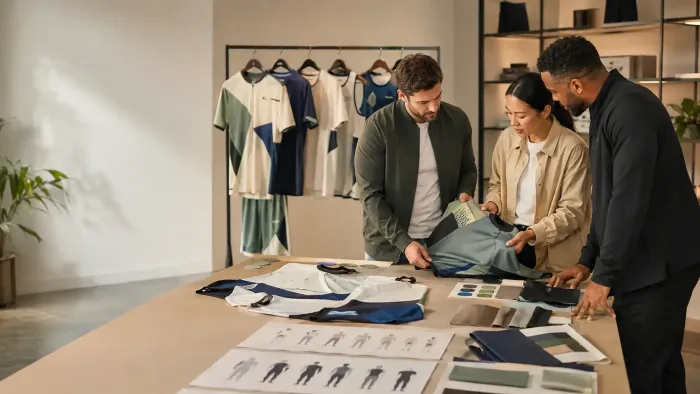
ODM is often the stronger starting point for a new brand, a club with a limited internal product team, or a buyer entering a sport category for the first time. A manufacturer can help narrow the choices: suitable garment platforms, fabric families, decoration methods, construction details, and the sample route.
That support does not remove buyer responsibility. Confirm in writing what is included in development, what files or patterns are delivered, what may be reused, whether any exclusivity applies, and who approves artwork, fit, colours, labels, and packaging. ODM does not automatically mean that intellectual-property rights or exclusivity transfer to the buyer.
Use ODM for faster decisions with manufacturing input—not to leave ownership, approval rights, or reorder access undefined.
Both routes share the same production release
The route may begin differently, but a factory cannot manufacture reliably from a vague idea. Tonton’s published service flow moves through product, artwork, sizing, fabric, and application choices, then requires final written approval before manufacturing begins.
Manufacturing knowledge—actual release workflow: treat final approval as a control point, not an email formality. OEM buyers release a complete specification; ODM buyers still release one agreed package after development support. Identify the garment, size chart, artwork version, colours, fabric, application, labels, packaging, quantities, and sport-specific requirements.
Recommend: approve one version-controlled master record for reorders.
Do not: approve a sample while leaving production artwork, label layout, or packing instructions “to be confirmed.”
For buyers, that is a real procurement constraint: bulk production should follow a released specification, not a collection of chat messages, mood boards, and changing files.
Use the sample to decide how much control you need
A sample bridges development and bulk production. In OEM, it checks interpretation of your approved specification; in ODM, it also resolves remaining design and construction choices.
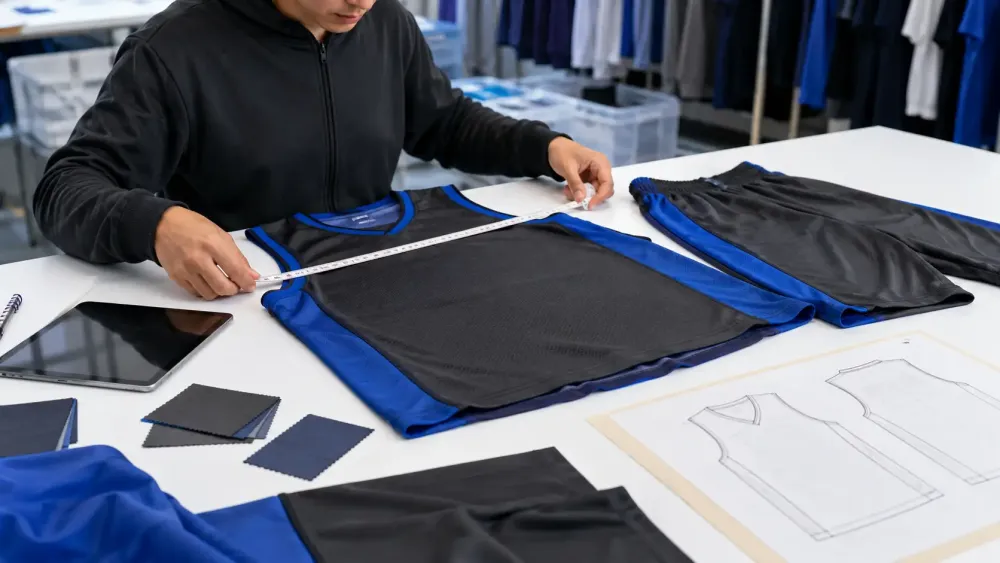
Review it in the conditions the athlete or customer will notice: fit and movement, neckline and sleeve comfort, fabric hand feel, opacity where relevant, decoration placement, and the relationship between top and short. A basketball kit and a football training top can share a buyer profile, but they should not inherit the same fit assumptions without review.
Put commercial ownership and brand assets in writing
OEM and ODM do not answer every commercial question. Your agreement should state the treatment of artwork, pattern work, grades, fabric specifications, trims, labels, packaging files, and approved samples—including permitted use, confidentiality, and records for a future reorder.
Be precise about branded assets. A factory needs authorised artwork and clear usage instructions; it should not be asked to reproduce a third party’s protected crest, sponsor mark, or design without permission. For a club program, identify who has authority to approve names, numbers, sponsor placement, and player allocation data.
Make quality control follow the approved master record
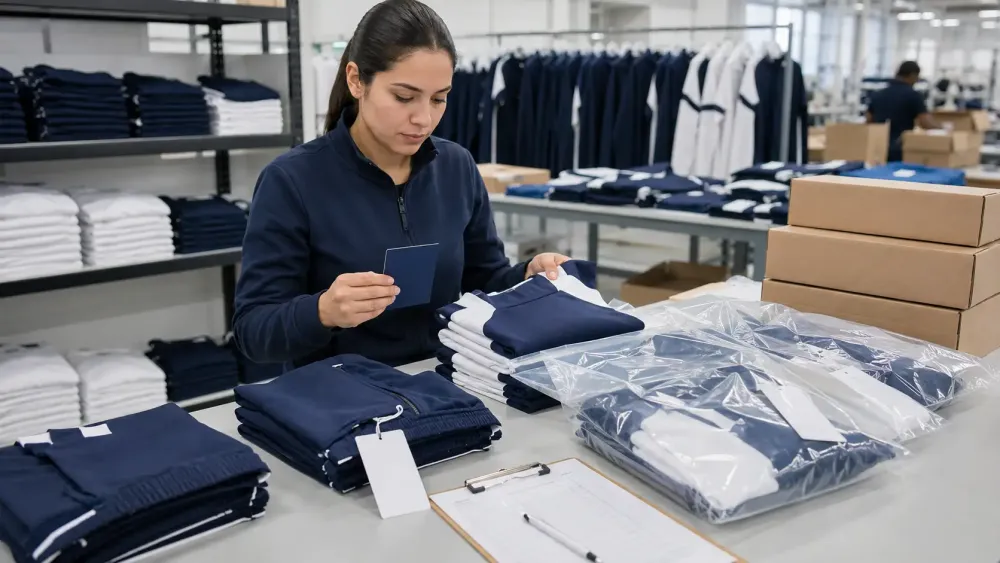
Quality control needs one source of truth. Before production, turn the approved sample and release package into checkable points: measurements, artwork placement, colour reference, construction, size breakdown, and packing rules. During packing, check that garments, sizes, personalisation, and carton allocation match approved order data.
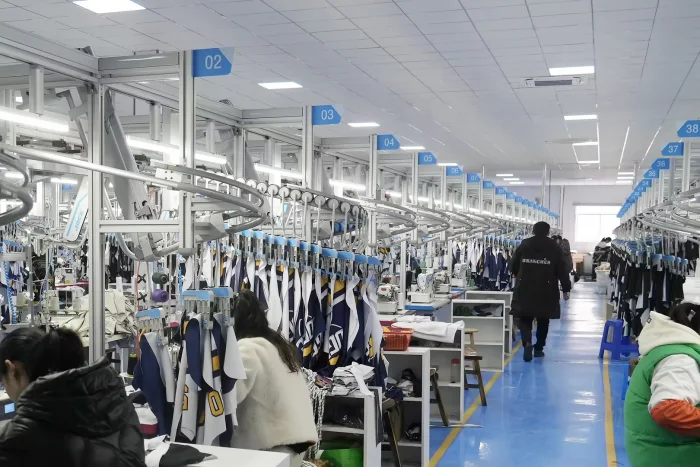
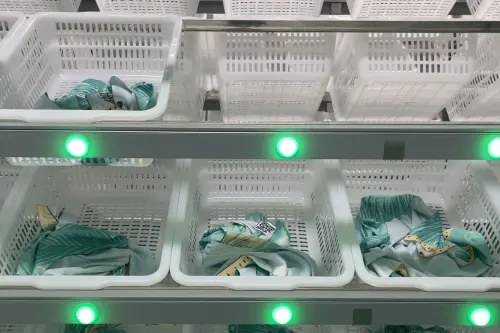
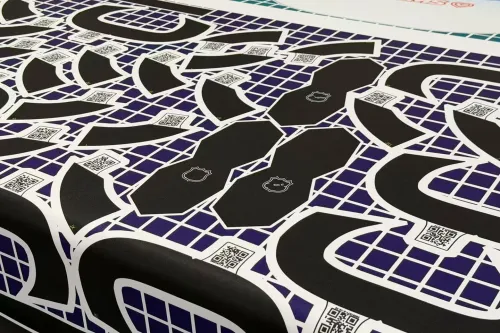
Tonton describes QR-code tracking with unique digital identifiers on its website. For any individual program, ask what traceability and inspection records will actually be used for your order, at which stage, and how exceptions are recorded. A published capability is not the same as a project-specific QC plan.
Compare quotes and schedules as different scopes
A lower unit price can hide a narrower development scope. Compare quotations line by line: development, sampling, fabric and trims, applications, labels, packaging, quality checks, personalisation, and shipping terms. Confirm quantity assumptions and minimums for the specific product; do not generalise one program’s MOQ to every garment, fabric, or decoration method.
Likewise, separate design approval, sample approval, production completion, dispatch, transit, customs clearance, and final arrival. A credible delivery plan names the approval deadline, then confirms the current production and freight schedule rather than promising an undifferentiated “delivery time.”
When you are ready to map the route to your assortment, discuss an OEM or wholesale teamwear program with Tonton.
Conclusion: choose the workflow that matches your present capability
Choose OEM when you can provide and control a complete, stable product specification. Choose ODM when you need structured manufacturing input to develop the product before release. In either route, the safeguard is the same: one approved master record, a sample reviewed against it, and a QC plan tied to it.
For repeat orders, aim for a documented product system that makes the next release clearer, faster, and easier to verify.
Frequently asked questions
Is OEM always better for established sportswear brands?
Not always. OEM suits a brand with a stable, complete specification. An established brand may still use ODM support for a new sport category, material direction, or product platform.
Does ODM mean the manufacturer owns my brand?
No. Brand ownership, artwork rights, pattern access, confidentiality, and exclusivity are commercial terms that should be stated clearly in writing. Do not infer them from the term ODM.
Do I need a physical sample for an OEM order?
Often, yes—especially when fit, fabric, decoration, or construction needs confirmation. The right sample route depends on the product and risk level, so agree it before bulk release.
Can one collection use both OEM and ODM?
Yes. A buyer might use OEM for a proven core jersey and ODM support for a new warm-up layer. Keep the responsibility and approval path clear for each SKU.
What should I ask for before approving bulk production?
Ask for the final version-controlled specification, approved sample reference, artwork and colour confirmation, size breakdown, labels and packaging details, quantity confirmation, QC checkpoints, and the agreed shipment terms.